Table of Contents
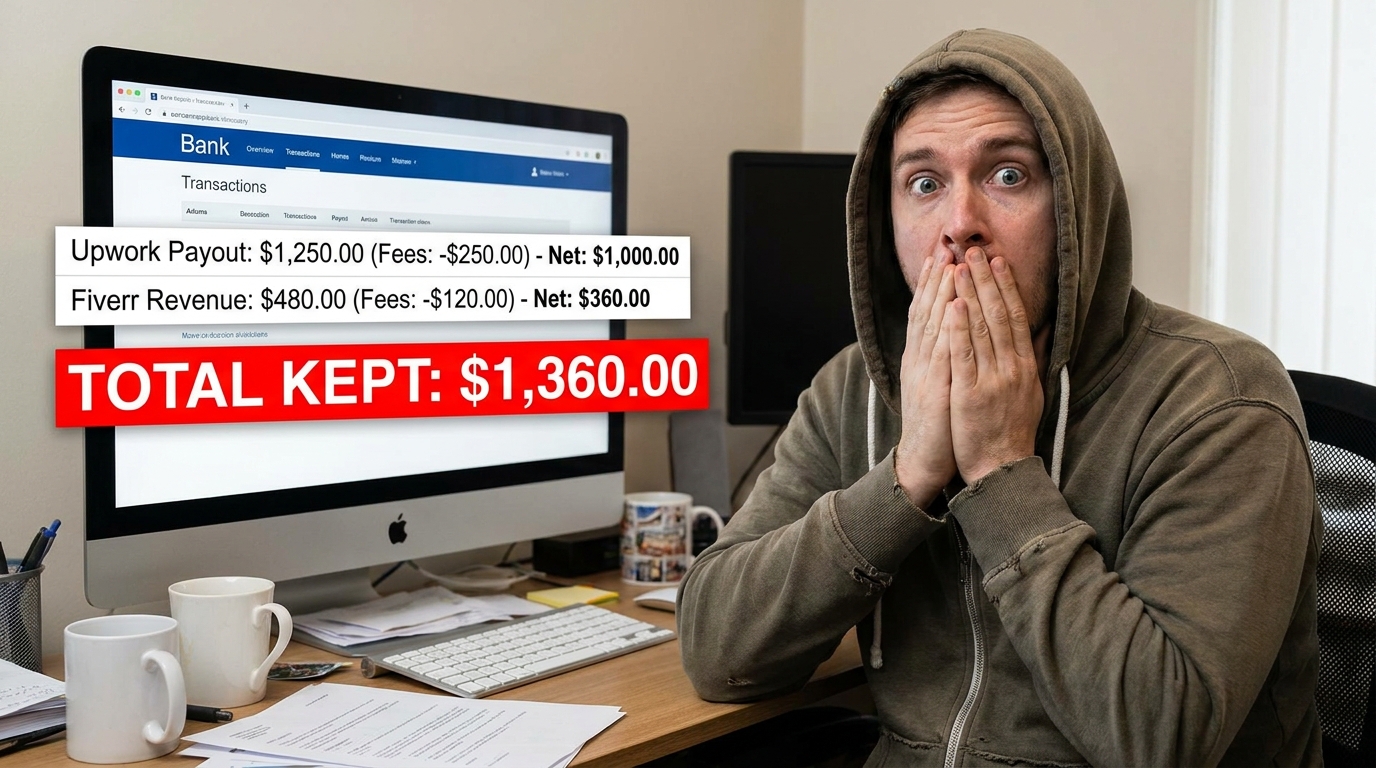
Upwork and Fiverr charge in structurally different ways. Fiverr takes a flat commission on every order. Upwork sets a variable fee per contract, shown before you accept it. A freelancer working on both cannot compare them by headline rate, because one is fixed and the other is not. What you keep across both is the sum of each platform's gross, minus each platform's own fee, minus withdrawal and currency costs, minus what you owe on the profit.
Upwork and Fiverr Together: What a Freelancer Actually Keeps
Platform fees change without notice. The fee figures in this article were checked in September 2026 and are used as worked examples, not as current rates. For what a platform charges today, see Upwork and Fiverr.
Plenty of freelancers work both. Fiverr for the packaged, repeatable work that sells itself from a listing. Upwork for the longer engagements that come from a proposal. It is a sensible split, and it produces a problem that neither platform will help you with.
The two platforms do not charge in the same shape. Not the same rate expressed differently, the same way two shops might price the same thing. A genuinely different structure, which means the two numbers on your two dashboards are not comparable and cannot be added together into anything meaningful without work.
One is a rate, the other is a quote
Fiverr's commission is flat. It applies to every order, including tips, and it does not move with volume or with how long you have worked with a buyer. Whatever you charge, you know what you keep before you charge it.
Upwork's is set per contract. Since 1 May 2025 it has been variable, shown to you at proposal time and fixed for that contract once accepted. Upwork does not publish how the figure is calculated. Before that it was a flat rate, and before that a tiered structure based on lifetime billings with each client, which is why so much advice you will find online is describing a system that no longer exists.
The practical consequence is that you cannot answer "what does Upwork take" the way you can answer it for Fiverr. You can only answer "what did Upwork take on that contract". A freelancer with six Upwork contracts may have six different effective rates.
Why the headline rates mislead in both directions
Set two platforms side by side on their advertised numbers and you will reach the wrong conclusion, because the advertised number is not the whole cost on either side.
On Fiverr, the commission is the visible layer. Underneath it there is a buyer-side service fee that shapes what a buyer is willing to pay you in the first place, withdrawal costs when you move money out, and currency conversion if you are not paid in your own currency. None of those appear in the commission figure.
On Upwork, the variable fee is the visible layer. Underneath it there are Connects for submitting proposals, which is a real cost of winning work whether or not you win it, and VAT charged on Upwork's own fees in some countries, and the same withdrawal and currency costs.
The Upwork versus Fiverr fee comparison puts both stacks next to each other. It is worth running once with your own numbers, because the answer is frequently not the one the headline rates suggest.
Two payout rhythms, one bank account
Upwork holds funds through its own release schedule. Fiverr clears completed orders on its own clock, with a different waiting period depending on seller level, and charges for early access.
Both are reasonable policies. Together they mean the money arriving in your account this week is a mixture of work done at different times on different platforms, minus withdrawal fees on each, and possibly converted at two different exchange rates on two different days.
Ask that bank balance what you earned last month and it cannot tell you. It is not a record of your work. It is a record of when two companies decided to pay you. The Upwork payout calendar and the Fiverr one set out the two schedules, which is what you need to read a month properly.
The threshold trap
This one has a real cost attached.
Reporting thresholds attach to the platform, not to you. Each platform decides independently whether your activity with them crosses the line at which they report you or issue paperwork. Two platforms each sitting below a threshold produce no forms at all.
Your tax obligation does not work that way. It attaches to your total income across both, and it exists whether or not anybody sent you a form. A freelancer earning moderately on both platforms can genuinely receive nothing in the post and still owe tax on the total across both.
The same logic applies to registration thresholds in countries that have them. They are measured on your total turnover, not on your turnover per platform, and a freelancer splitting work across two marketplaces can cross one without either platform giving any sign of it.
What the multi-platform figure actually is
Take the gross that each platform recorded, not the net that arrived. Gross is what the client was charged, and it is the figure a tax authority is likely to see.
From that, subtract each platform's own fee, which is a deductible business cost and needs to be visible as one rather than buried inside a net deposit. Subtract withdrawal and conversion costs, which are also deductible and are the ones most often forgotten because they happen at the bank end rather than the platform end.
What is left is profit across both platforms. That is the number that gets taxed, the number that answers whether freelancing is working, and the number neither dashboard contains.
Track the business, not the platforms
The habit worth building is to stop thinking of Upwork income and Fiverr income as two things. There is one freelance business here with two sales channels.
That means recording gross and fee separately for every job on both platforms, keeping withdrawal and conversion costs where you can see them, and keeping a single running total. Done that way, the question of which platform serves you better stops being a matter of opinion and becomes something you can read off your own records.
Frequently Asked Questions
Work this out for yourself
Mason
FCCA FellowFounder, PlatformTaxHub | Author of the Platform Transparency Series
I help multi-platform earners find the income their dashboards are hiding — and keep more of what they actually make. Fellow of Certified Accountants and former Finance Transformation specialist with decades of experience across FTSE 250 and global organisations. PlatformTaxHub was built after experiencing the platform income problem firsthand and seeing what tax authorities have planned for the earners who aren't ready.
👉 Get your free Platform Earnings Health Check